
The French DIY market declined by 4.3% in 2024. Behind this downturn, the very nature of household projects is transforming. We are witnessing a structural shift that reshapes in-store offerings, pricing strategies, and the role of the physical point of sale.
Maintenance and routine repairs: the new foundation of DIY in 2024
Heavy renovations related to older real estate are significantly decreasing. Extensions, major construction, five-figure budgets: these projects are heavily impacted by households’ wait-and-see attitude in the face of economic and geopolitical uncertainty.
At the same time, routine maintenance and economical repairs are on the rise. DIY enthusiasts are not stopping their purchases; they are redirecting their spending towards more modest interventions: replacing a seal, repainting an interior, refurbishing an existing piece of furniture. This shift alters the product mix on the shelves, with increased demand for consumables (glues, fillers, fastening hardware) at the expense of large equipment ranges.
This trend has a direct impact on retailers’ margins. Average basket sizes are decreasing, but visit frequency remains stable. DIY retailers are adapting their shelves by enhancing spaces dedicated to small repairs and quick fixes, a repositioning that purely macro analyses of the sector underestimate. The news from Univers du Bricolage regularly highlights these fundamental changes that restructure in-store offerings.
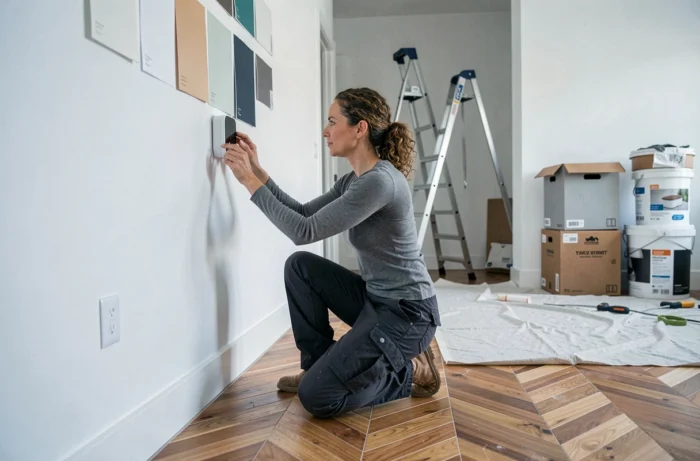
The DIY store becomes a place for energy renovation advice
The gradual reduction of public aid, led by MaPrimeRénov’, is pushing individuals to seek technical advice outside of artisans or institutional platforms. Large DIY stores are capturing this demand.
The physical point of sale is repositioning itself as a project management hub: quotes, technical support, sometimes financing solutions. It is no longer just a product distributor. Some retailers are training their teams to interpret energy performance diagnostics to guide customers towards the right insulation or ventilation materials.
This positioning represents a differentiation lever against e-commerce. A consumer who is torn between two types of insulation or who does not understand the regulatory constraints related to RE 2020 needs a qualified contact. We recommend that retailers investing in this niche structure dedicated spaces in-store, separate from traditional self-service, to enhance the credibility of this advisory offer.
Online DIY sales: growth in a declining market
Online DIY continues to gain market share in a globally contracting market. Physical retailers still account for nearly three-quarters of the total value, but the digital channel is growing each year in proportion.
The online dynamic does not affect all segments equally. Products with high informational added value (power tools, home automation systems, solar kits) perform better online, where consumers compare technical specifications. In contrast, heavy materials (bags of filler, plasterboards, structural timber) are still predominantly purchased in-store for obvious logistical reasons.
What still hinders the sector’s digitalization
The omnichannel purchasing journey remains uneven from one retailer to another. Several obstacles persist:
- Real-time stock management between the website and the physical store creates visible shortages for the customer, who loses confidence in click-and-collect
- Product sheets often lack usable technical data (compatibility, standards, precise dimensions), which drives knowledgeable DIYers to rely on forums or specialized resellers
- Personalized advice, a historical strength of the store, has yet to find a satisfactory digital equivalent despite chatbots and online configurators
Retailers that invest in the quality of product data and reliable technical recommendation tools will gain a lasting advantage in this channel.
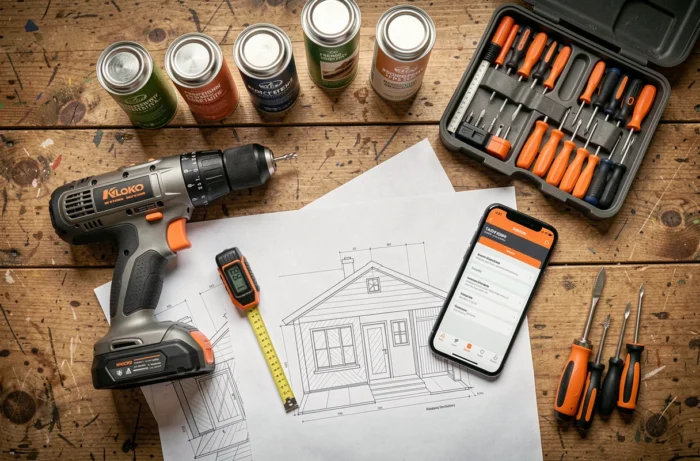
Concentration of DIY retailers and impact on DIY prices
The French DIY market is more concentrated than ever around four major groups. This consolidation changes the power dynamics with industrial suppliers and affects pricing policies.
In a context of more rational consumption, retailers are leveraging two levers: private label brands (PL) and tool rental. PLs are gaining ground in categories where the manufacturer brand does not provide any perceptible technical differentiation for the end customer. Rental, on the other hand, meets a structural need: the occasional DIYer refuses to invest in a tool they will use twice a year.
Services and tool rental: a growth driver
Tool rental in DIY stores is not new, but its scope is expanding. Sanders, pressure washers, SDS-Plus drills: ranges once reserved for professional renters are appearing on the shelves of large stores. This model generates recurring traffic and retains a price-sensitive customer segment.
- Short-term rentals (half-day, weekend) overwhelmingly dominate individual demand
- Retailers are increasingly coupling rental with on-site advisory services to ensure proper handling
- The refurbishment of power tools is beginning to emerge as a complement, driven by the growing sensitivity to reuse
The DIYer of 2024 buys less but rents more and repairs more. This behavior compels distributors to rethink their economic model beyond just product sales volume. Retailers that can combine qualified advice, accessible rental, and reliable online product data will capture value in a market that is unlikely to return to 2021-2022 levels.