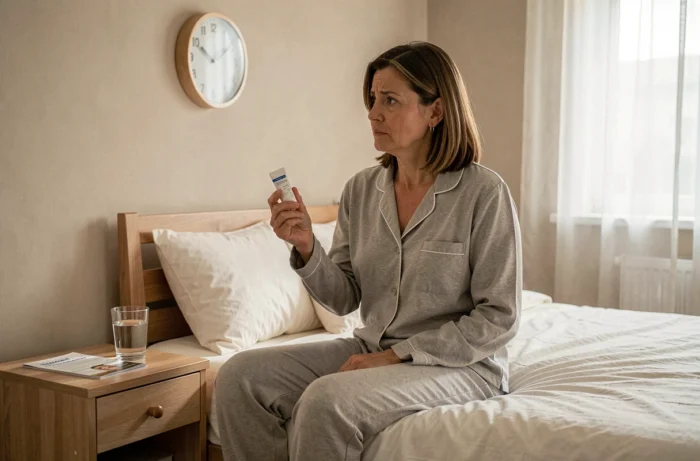
You have just administered a Microlax, you are waiting on the toilet, and nothing is happening. The instructions indicate an effect within a few minutes, but your body is not responding. This situation is more common than one might think, and the reaction to adopt depends on the elapsed time and associated symptoms.
Normal action time of Microlax and alert threshold
The Microlax micro-enema contains sorbitol, citrate, and sodium lauryl sulfoacetate. These three components soften the stools present in the rectum and lubricate the mucosa to facilitate expulsion. The effect usually occurs within 5 to 15 minutes, sometimes up to 20 minutes according to European instructions.
After this time, the temptation to reintroduce a second dose is strong. This is a common mistake. Close repetition can irritate the rectal area without resolving the blockage. To know how long to wait after Microlax, the simple rule is not to exceed 30 minutes of waiting before changing strategies.
Beyond 30 minutes without evacuation, do not re-administer a dose alone. Contact your pharmacist or doctor for tailored advice. The product is not designed for repeated use in the same sequence.
Rectal constipation or blockage higher up: why Microlax fails
Microlax acts only on the last centimeters of the rectum. Its action radius is local. If the stools are blocked higher up in the colon, the rectal solution simply does not reach the affected area.
Have you ever noticed a liquid discharge after a micro-enema, without solid stool? This phenomenon is misleading. The product bypasses the hard stool blockage without penetrating it. This seepage can be confused with diarrhea while the blockage remains intact.
Several situations explain this failure:
- A large, dehydrated fecaloma in the rectum, too compact for the solution to soften it on the surface.
- A high-origin constipation, where stools stagnate in the sigmoid colon or beyond, out of reach of the enema.
- An anal lesion (fissure, inflamed hemorrhoid) that causes a sphincter spasm and prevents expulsion, even if the stools are softened.
In the case of an anal lesion, the enema may worsen local irritation. If you experience sharp pain during the passage of the cannula, stop the administration.
Concrete actions to try before consulting a doctor
Before switching to an oral laxative or making an appointment, some mechanical adjustments may be enough to unblock the situation.
Change your posture on the toilet
Elevate your feet using a small stool to bring your knees closer to your chest. This position relaxes the puborectal muscle and straightens the anorectal angle. Expulsion becomes physically easier, without straining.
External lubrication
Applying a bit of petroleum jelly or water-based lubricant around the anus can help when the stool is visible but stuck. This action reduces friction without irritating the mucosa.
Glycerin suppository as a backup
A glycerin suppository acts differently from the micro-enema. It stimulates the evacuation reflex through a slight irritating effect on the rectal wall. In addition to a Microlax that has partially softened the stools, it can trigger the necessary contraction.
If none of these actions produce results within an hour, move on to the next step.

Alert symptoms: when to consult without delay
A Microlax that does not work is often benign. But certain associated signs change the situation and require prompt medical advice.
- Severe abdominal pain, unusual or worsening.
- Very distended abdomen with total inability to pass gas.
- Vomiting associated with constipation.
- Presence of blood in the stools or on the paper.
- Fever, even moderate, accompanying the blockage.
These symptoms may indicate an intestinal obstruction, a situation that falls under emergencies. Do not attempt an additional laxative if you exhibit several of these signs simultaneously.
Oral laxatives as a backup: what changes compared to rectal treatment
When the micro-enema fails and the situation is not urgent, an oral laxative can take over. The mechanism is different: instead of acting on the rectum, the osmotic laxative (macrogol, lactulose) draws water into the colon and softens the stools along their entire length.
The action time is longer, generally one to two days. This is not an immediate solution, but it addresses the problem at its source when the blockage is located above the rectum.
A stimulant laxative (bisacodyl, senna) induces intestinal contractions. It acts faster but can cause cramps. Its use should remain occasional. No stimulant laxative should be taken daily without medical supervision.
The choice between osmotic and stimulant depends on the likely location of the blockage and your history. Your pharmacist can guide you without a prescription for occasional use.
The failure of a Microlax is a signal that the problem goes beyond simple transient constipation. If the situation recurs, an evaluation with your doctor will help identify the cause (low-fiber diet, insufficient hydration, colonic motility disorder, medication side effect) and avoid the systematic use of emergency treatments.