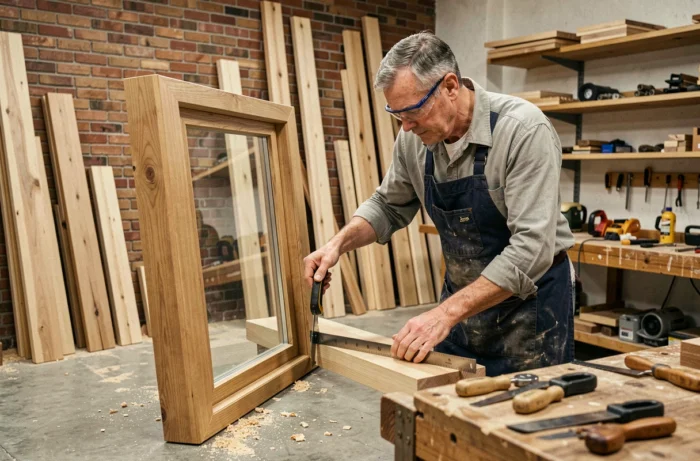
A window that rubs against its frame, a visible light under a front door on a sunny day, a persistent draft near a bay window: these inconveniences often stem from a gap between the actual dimensions of the opening and those of the installed product. Custom-made joinery exists precisely to eliminate this gap. They are manufactured to the exact measurements of each opening, which changes the game in terms of insulation, comfort, and durability.
Uw Coefficient and Summer Comfort: What RE2020 Requires from Joinery
You may have noticed that in the height of summer, certain rooms facing south become stifling from the morning? The environmental regulation RE2020 has introduced an indicator dedicated to this issue: the DH (degree-hours of discomfort). It measures the number of annual hours where the indoor temperature exceeds a given threshold (between 26 and 28 °C).
For a single-family home, the project is non-compliant beyond 1,250 DH. This constraint drives the design of joinery that incorporates solar protections tailored to the orientation of the openings: roller shutters, external blinds, adjustable sunshades.
A standard model, manufactured in fixed dimensions, does not always allow for the right glazing, the right Uw coefficient, and the right solar protection for each facade. A custom-made joinery, on the other hand, can combine a solar control glazing on the west facade and a classic triple glazing on the north side, all adjusted to the millimeter.
Specialized manufacturers offer configurations that standard catalogs do not cover. To discover the possibilities offered by a dedicated manufacturing workshop, a useful resource: https://www.menuiserie-deule.fr/.
Custom Joinery in Renovation: Solving the Problem of Non-Standard Openings
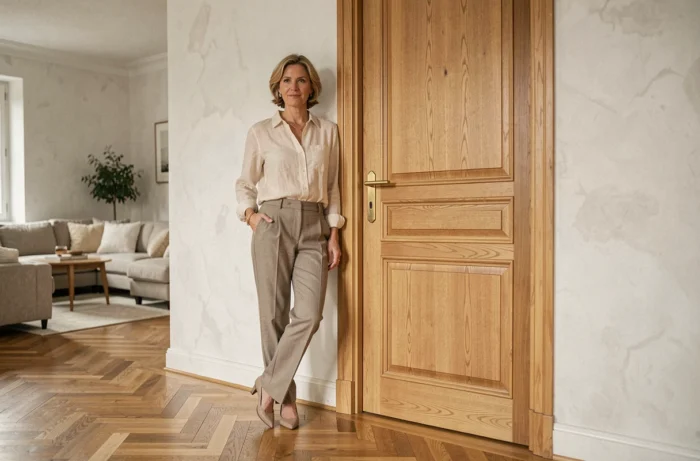
In new construction, openings are planned from the blueprint. In renovation, the situation is rarely that simple. Older buildings feature openings of varying dimensions, sometimes arched, sometimes trapezoidal.
Installing a standard window in a non-standard opening requires compensating for the gap with plaster, expanding foam, or oversized trim. These adjustments create thermal bridges that degrade the wall’s insulation. Air tightness suffers as well, which negates part of the expected benefit from window replacement.
A joinery manufactured to the measurements taken on-site eliminates these adjustments. The frame fits the opening, the sealing joint works over its entire surface, and the thermal performance claimed by the manufacturer corresponds to the actual performance once installed.
Typical Cases Where Customization Becomes Necessary
- Arched or semi-circular openings in character homes, where no catalog format fits without cutting the existing structure.
- Large bay windows in contemporary extensions, which exceed the maximum dimensions of standard ranges.
- Roof windows on atypical sloped roofs, where the height of the sill and the angle of inclination dictate the choice of frame.
- Entrance doors in Haussmannian buildings, whose height regularly exceeds the sizes available in large DIY stores.
Wood, PVC, or Aluminum: Choosing the Material According to the Project, Not the Trend
The choice of material is often presented as a matter of taste. In reality, each material responds to different technical constraints. Customization allows for selecting the right material for the right opening, without being limited to a single range.
Wood offers natural thermal insulation and adapts easily to complex shapes (arches, transoms). It requires regular maintenance, but current finishes (micro-porous stains, hydrophased paints) extend maintenance cycles.
PVC remains the most common material for windows. Its thermal performance/price ratio is hard to beat. In custom-made options, it allows for colored profiles in the mass or laminated, with shades that last over time.
Aluminum stands out for its slim profile. On a large bay window, an aluminum post allows more light to pass through than a thicker PVC post. In thermal break versions, its thermal performance approaches that of PVC.
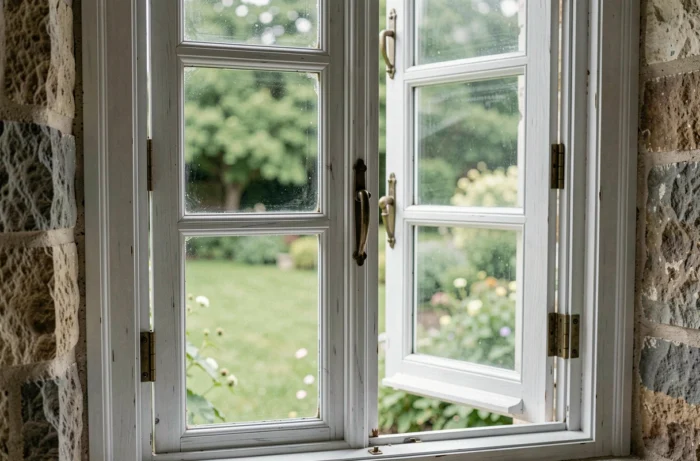
Combining Two Materials in One Joinery
Mixed joinery (wood-aluminum, for example) combines the warmth of wood on the inside and the durability of aluminum on the outside. This type of manufacturing practically only exists in custom-made options, as mixed assemblies require precise adjustment between the two materials.
This choice is particularly relevant in regions exposed to harsh weather or by the sea, where the exterior aluminum protects the wood without requiring frequent treatment.
Glazing and Performance: Adapting the Composition Pane by Pane
Glazing is not just about “double” or “triple”. The composition of each pane (glass thickness, filling gas, surface treatment) alters the behavior of the window.
- A low-emissivity glazing limits heat loss in winter while allowing light in.
- A solar control glazing reduces summer heat gain, which directly contributes to staying below the DH threshold imposed by RE2020.
- A laminated glazing enhances anti-burglary security, a point often overlooked for ground-floor joinery.
In custom-made options, each window in the house or apartment can have a different glazing composition. The south facade does not have the same needs as the north facade, and it would be a shame to install the same lukewarm compromise everywhere.
Custom joinery is not justified by a luxury argument. They respond to concrete constraints: non-standard dimensions, regulatory requirements, targeted thermal performance by facade, choice of materials suited to the local context. In a renovation project as in new construction, manufacturing to the actual dimensions of the opening remains the most reliable way to achieve the performance claimed by the manufacturer.