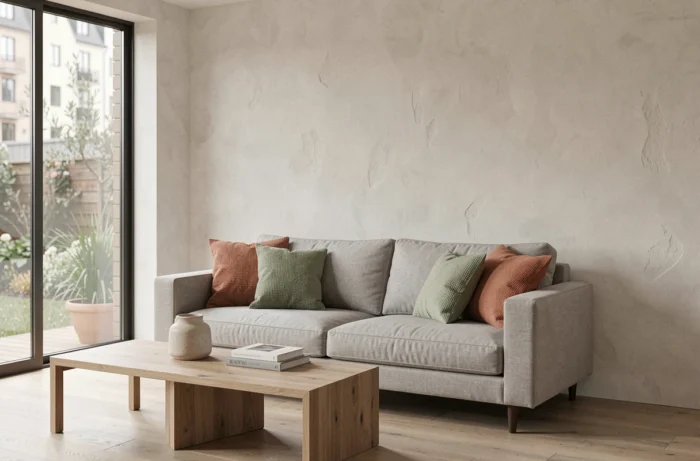
A pleasant living space is no longer just about color choices or furniture. According to the study “Heatwave & Real Estate 2026” conducted by Leboncoin, 81% of French people report feeling discomfort related to high temperatures in their homes. The modern and comfortable house is now defined by its ability to protect its occupants from the climate as much as by its aesthetics.
Summer comfort in housing: a criterion that decor cannot solve
You may have noticed that a room facing south becomes unlivable as early as June, even with a state-of-the-art fan? This observation, shared by a majority of households, is prompting buyers and renters to examine very concrete parameters before moving in.
Cross-ventilation (windows on two opposite facades) allows for a natural airflow at night. The presence of external shutters, deciduous trees in front of large windows, or a sufficient roof overhang to shade the walls in summer: these are what make the difference between a livable interior and a furnace.
The summer comfort barometer 2026 published by OneDPE confirms the extent of the problem: about 40% of assessed homes are deemed insufficient in summer comfort, 43.2% receive an average rating, and only 16.6% are classified as good. In other words, the vast majority of the French real estate stock is not suited to current summer temperatures.
For those who want to learn more about Kali News, the topic of thermal comfort is addressed from a practical angle, with concrete suggestions for adapting one’s habitat.
More than a third of the French now incorporate climate considerations into their residential reflections, whether for choosing a place to live, the orientation of the property, or natural ventilation. Summer comfort has become a full-fledged real estate criterion, on par with surface area or the number of rooms.
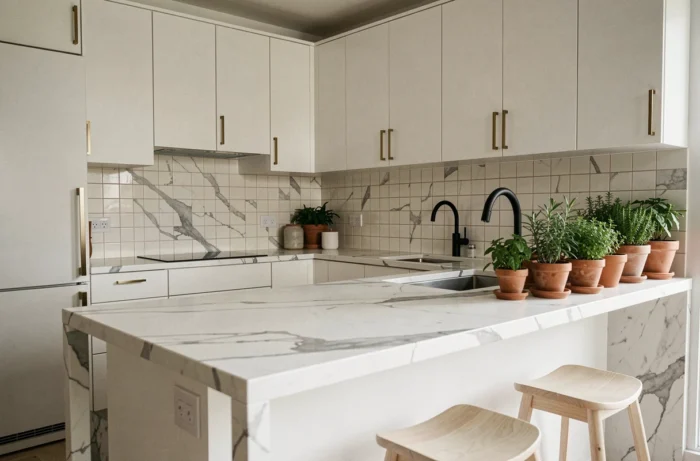
Mandatory energy renovation: what regulations change for your home
Talking about a modern home without mentioning energy performance no longer makes sense. Recent regulations on “thermal sieves” impose concrete obligations on landlords, and owner-occupiers are also affected by diagnostic incentives.
The DPE (energy performance diagnosis) classifies each home from A to G. Homes rated G are gradually prohibited from being rented out. This legal constraint transforms the very notion of comfort: a comfortable home is primarily a well-insulated and ventilated home.
Insulation and ventilation before decoration
A poorly insulated wall is a barrier that radiates heat inward in summer and allows heating to escape in winter. Before choosing trendy wall coverings, one must check the state of the insulation.
- Insulating the attic remains the project with the best cost-effectiveness, as heat rises and accumulates under the roof
- External insulation (ITE) eliminates thermal bridges without reducing living space, but represents a more significant budget
- Controlled mechanical ventilation (VMC) with double flow renews the air without letting in outside heat, a point often overlooked in renovation projects
These works may not be spectacular in interior photos. However, they radically change the daily experience.
Modern interior design: the material choices that really matter
Once the building is efficient, the choices of decoration and layout take on their full meaning. Current trends value materials that contribute to thermal and acoustic comfort, not just appearance.
Wood as a natural regulator
Solid wood (flooring, cladding, furniture) has the ability to absorb and release ambient humidity. In a properly ventilated room, an oak or beech floor helps maintain a stable humidity level. Wood naturally regulates indoor humidity, which improves perceived comfort without any additional equipment.
Local species, which are less expensive than exotic woods, are increasingly popular. Ash, chestnut, or Douglas fir offer varied shades and durability suitable for indoor use.
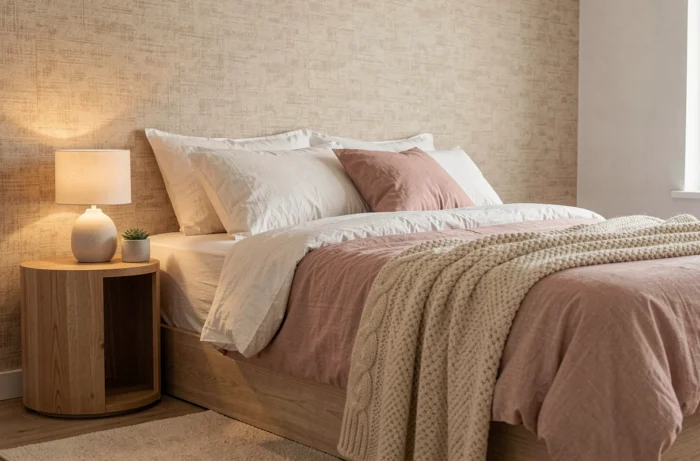
Open kitchen and living room: rethinking air circulation
The open kitchen-living room space, very popular, has an often underestimated advantage: it promotes air circulation within the home. Provided that the flow is not blocked by a massive central island placed directly in front of the only window.
Why does this detail matter? Because a poorly designed open plan concentrates cooking odors and heat from appliances throughout the living space. Placing the cooking area near an exterior opening limits this problem and reduces the need for air conditioning.
Home automation and shutter control: measurable comfort for the home
The automated management of roller shutters is one of the most cost-effective investments in thermal comfort. The principle is simple: light and temperature sensors trigger the closing of the shutters before the sun directly hits the glass.
This system significantly reduces indoor temperature without consuming energy for air conditioning. The hourly programming, accessible from a smartphone, also allows for adapting the home to one’s lifestyle.
- Shutters programmed to close automatically between 11 a.m. and 5 p.m. maintain the coolness accumulated during the night
- External blinds (adjustable sunshades) block heat before it reaches the glazing, unlike indoor curtains that trap it in the room
- A connected thermostat coupled with the VMC adjusts air renewal according to the outside temperature
The style of an interior remains a matter of personal taste. Colors, textiles, and furniture design are preferences that everyone adjusts over time.
What truly distinguishes a modern and comfortable home in 2026 is its ability to remain pleasant when the thermometer rises. Better insulation, better ventilation, better control of openings: three concrete axes that transform a well-decorated home into a truly comfortable living space.