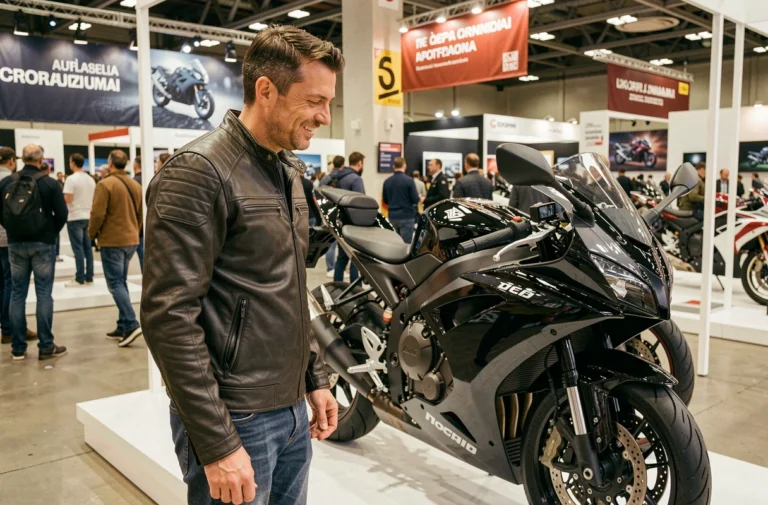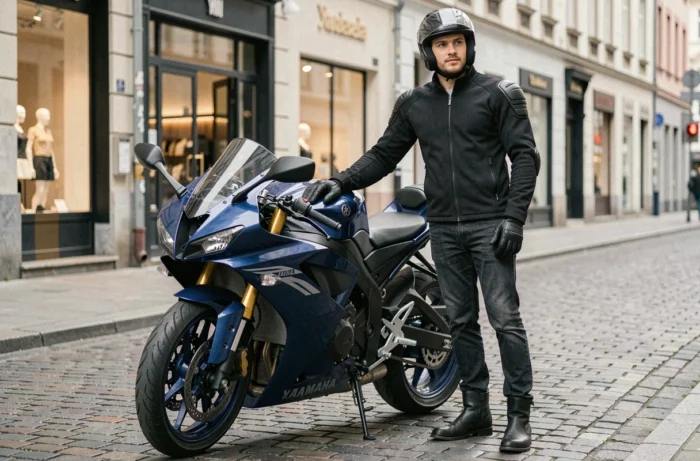
The Yamaha R6 and the A2 license come up in every conversation among beginner motorcyclists. The inline four-cylinder engine of the R6 produces a power output that far exceeds the regulatory threshold allowing for A2 restriction. Understanding why this sportbike remains, in almost all cases, incompatible with this license helps avoid costly mistakes when purchasing.
Original power threshold and A2 restriction: why the R6 struggles
The A2 license imposes three cumulative criteria: 35 kW after restriction, a power-to-weight ratio of less than or equal to 0.2 kW/kg, and an original power not exceeding 70 kW. It is this last condition that locks the situation for the R6.
On the majority of the produced generations, the 600 cm³ engine of the R6 shows an original power exceeding 70 kW on the registration document. A restriction kit cannot bypass this limit: European regulations, unchanged since 2013 and confirmed without modification until 2026, prohibit restricting a motorcycle whose factory nominal power exceeds double 35 kW.
We regularly see second-hand listings mentioning “A2 restricted R6” without any legal basis. The seller may have installed a mechanical or electronic limiter, but without homologation, the installation remains illegal and the motorcycle uninsurable under A2. In case of a check or an incident, the insurer may refuse any coverage.
To verify if a specific model falls below the 70 kW threshold, the only reliable reference remains the P2 field of the registration document. An R6 whose original power is listed above 70 kW will never be eligible, regardless of the preparer consulted. We recommend cross-referencing this data with the manufacturer’s technical sheet before any financial commitment, as knowing if the Yamaha R6 compatible with the A2 license actually exists entirely depends on this verification.
Second-hand Yamaha R6: market pitfalls for A2 license holders
The second-hand market is full of R6s at attractive prices, which fuels temptation. The end of the road commercialization of the R6 by Yamaha, now reserved for track use, has caused prices for certain vintages to drop. A young A2 license holder may come across an appealing ad without realizing the regulatory oversight.
Three checks are necessary before signing:
- The P2 field of the registration document must show a power strictly less than or equal to 70 kW. Beyond that, no homologated restriction is possible.
- If a restriction kit is already installed, demand the homologation certificate from the kit manufacturer and the mention on the registration document (box Z). A “homemade” restriction without official documentation has no value.
- Check that the model has not been imported with a technical sheet different from the French market. Announced powers sometimes vary depending on the country of first registration.
An R6 purchased without these checks exposes the buyer to vehicle immobilization and a refusal of compensation in case of an accident. The cost of a bad purchase far exceeds the savings made on the second-hand price.
Sporty Yamaha alternatives truly eligible for the A2 license
Yamaha offers models designed from the outset for the A2 segment. The YZF-R7, with its twin-cylinder engine, fits within the regulatory requirements without any tricks. Its original power allows for a homologated restriction to 35 kW, and the power-to-weight ratio remains below the 0.2 kW/kg threshold.
The MT-07, available in a roadster version, shares the same engine base. It provides a more versatile entry point for daily use, with a riding position less radical than the R7.
R7 vs. restricted R6: a false dilemma
Comparing a restricted A2 R7 and a hypothetical restricted R6 makes no sense from a legal standpoint. However, from a dynamic perspective, the R7 offers a sporty chassis, decent braking, and a manageable weight that greatly satisfies a progressing rider.
The torque available at low revs on the R7’s twin-cylinder engine exceeds that of the restricted R6 in the rev ranges used in road riding. The R6 delivers its power very high in the rev range, an advantage that is only exploitable on the track, not on the road with a limitation to 35 kW.
A2 regulations and pathway to the A license: actual timeline
After two years of holding the A2 license, a complementary training of seven hours allows access to the A license without retaking an exam. This pathway then opens access to all motorcycles, including the R6.
No reform has changed this two-year period since the implementation of the system in 2013. Rumors of relaxation circulating on forums are not based on any published text. The A2 legal framework remains strictly the same in 2024 and beyond.
For a motorcyclist dreaming of an R6, the most rational strategy is to ride for two years on a suitable A2 motorcycle, complete the pathway training, and then acquire the sportbike at full power. Buying an R6 before this period poses a legal and financial risk without benefiting from the machine’s potential.
The R6 remains a characterful motorcycle, designed for high-rev performance. Restricting it would neutralize precisely what makes it interesting. Two years of patience on an R7 or an MT-07 better prepares one for riding a sporty four-cylinder than any administrative shortcut.