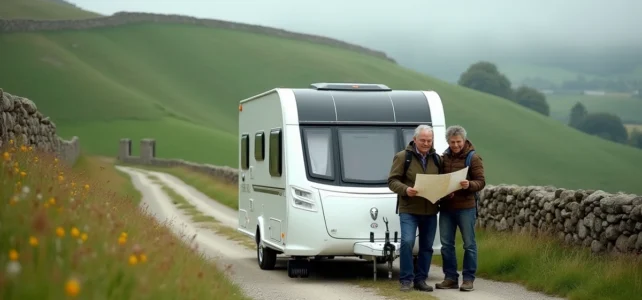
Comparing compact 2-person caravans involves balancing three variables: empty weight, overall length, and the level of sanitary equipment. A model under 750 kg is exempt from additional administrative constraints in most European countries. A model under 1,000-1,200 kg remains compatible with a mid-size sedan or SUV, as long as the total weight of the car plus caravan stays under 3,500 kg for a standard B license.
This ranking features seven concrete references, ordered by their ability to combine lightness, livability, and autonomy for two people.
Before detailing each model, a synthetic comparison helps to highlight the differences. To delve deeper into compact 2-person caravan models, several criteria deserve careful reading: type of bedding, presence or absence of a toilet, and compatibility with the towing vehicle.
| Model | Weight Segment | Strength |
|---|---|---|
| Caravelair Alba 350 | Under 1,000 kg | Fully electric, no gas |
| Adria Action 361 LH | About 1,000 kg | Aerodynamic profile, longitudinal bed |
| Fendt Bianco Activ 390 FHS | About 1,100 kg | Separate bathroom |
| Knaus Sport 400 LK | About 1,100 kg | L-shaped kitchen, high storage |
| Niewiadow N126 | Under 750 kg | Ultra-light, no special license |
| Pino Caravan Pi XL | Under 750 kg | Compact with integrated toilet |
| Weinsberg CaraOne 390 QD | About 1,100 kg | Transverse queen bed |
1. Caravelair Alba 350: the fully electric compact
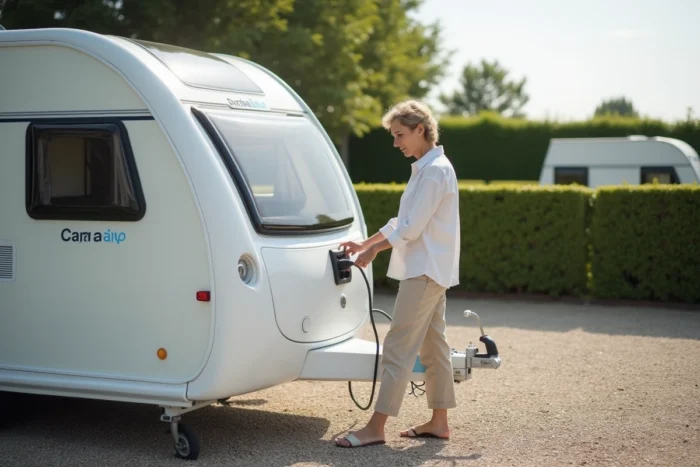
The Caravelair Alba 350 stands out for its rare technical choice in this segment: fully electric power supply. Induction cooktop, 12 V compressor refrigerator, auxiliary battery. No gas bottles to carry, simplifying logistics and reducing the weight on board.
With a permanent sleeping area for two and a toilet, it meets the minimal comfort requirements without exceeding the psychological threshold of 1,000 kg. Its short size makes it maneuverable in parking and compatible with most recent compact cars.
The trade-off lies in the electric autonomy: without an external connection, the auxiliary battery requires careful management of consumption, especially for the induction cooktop.
2. Adria Action 361 LH: aerodynamics for towing
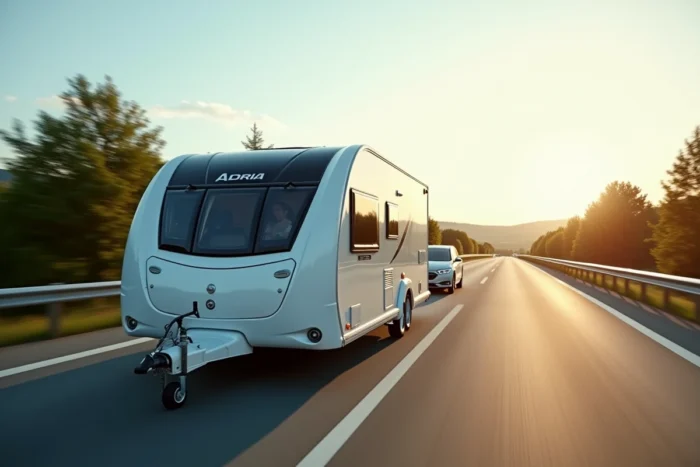
The Adria Action 361 LH adopts a rounded profile that is not just aesthetic. This shape reduces wind resistance, a measurable advantage on the highway where the stability of the hitch affects driver fatigue.
The longitudinal bed frees up a wider central passage than transverse configurations. The kitchen space remains functional, and the interior height is sufficient to stand without constraint. The weight around 1,000 kg places it in the ideal range for a mid-size family SUV.
However, the toilet is compact, even for this segment. Campers looking for a true separate bathroom will need to look elsewhere.
3. Fendt Bianco Activ 390 FHS: the bathroom that makes a difference
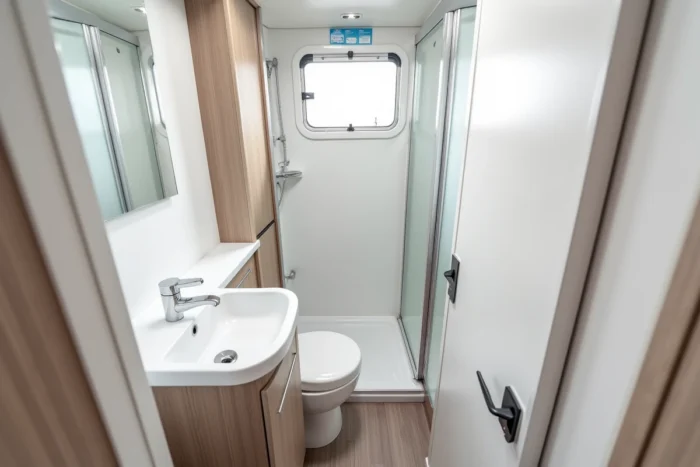
The Fendt Bianco Activ 390 FHS meets a specific demand: having a separate bathroom with a shower in a compact caravan. This sanitary comfort, often reserved for longer models, justifies this model’s appeal for multi-day stays without nearby sanitary blocks.
The weight rises to around 1,100 kg, which remains below the 1,200 kg mark but requires checking the towing capacity of the towing vehicle. The Fendt finish, renowned in the caravaning world, translates into careful adjustments and durable furniture.
4. Knaus Sport 400 LK: optimized kitchen volume
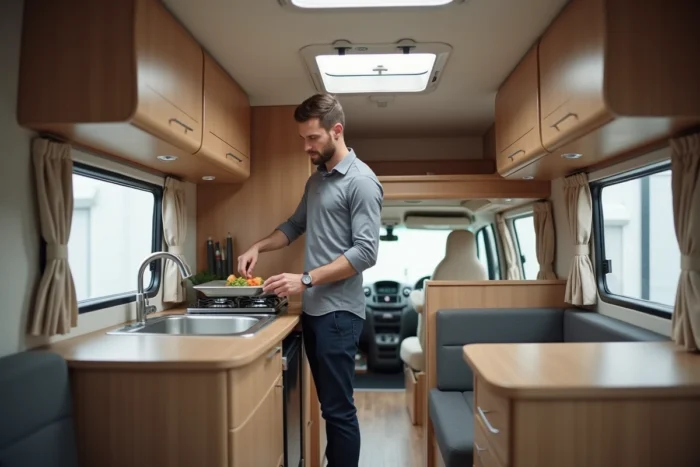
The Knaus Sport 400 LK prioritizes meal preparation space with an L-shaped kitchen and high storage. For a couple who regularly cooks while traveling, this configuration changes daily life compared to narrow linear worktops.
The sleeping area for two remains comfortable, and the overall length does not exceed the segment average. The high storage compensates for the absence of a large storage compartment, a compromise typical of compact caravans.
The weight is in the same range as the Fendt, around 1,100 kg. Compatibility with a city car is excluded: a road sedan or SUV is necessary.
5. Niewiadow N126: under 750 kg, the choice of administrative freedom
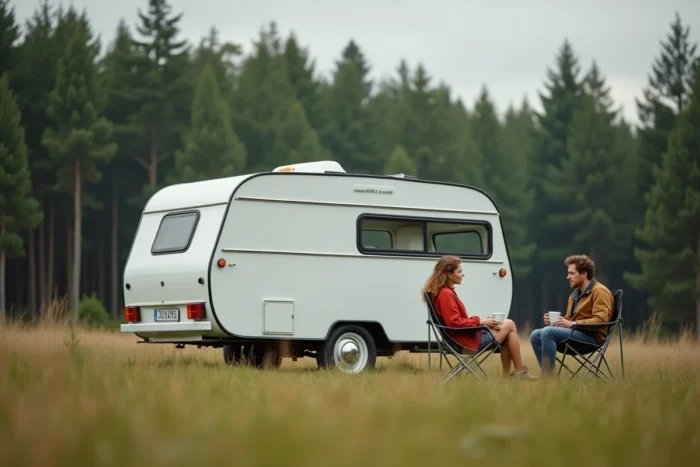
Staying under the 750 kg mark opens a concrete advantage: no specific technical inspection or burdensome registration in several European legislations. The Niewiadow N126 exploits this niche with a minimal size and featherweight.
Livability remains spartan. There is sleeping for two, but the daytime living space is limited to the bare essentials. No integrated bathroom in this model. This choice is aimed at campers who accept minimalism in exchange for towability by almost any car, including a city car.
6. Pino Caravan Pi XL: the smallest with a toilet
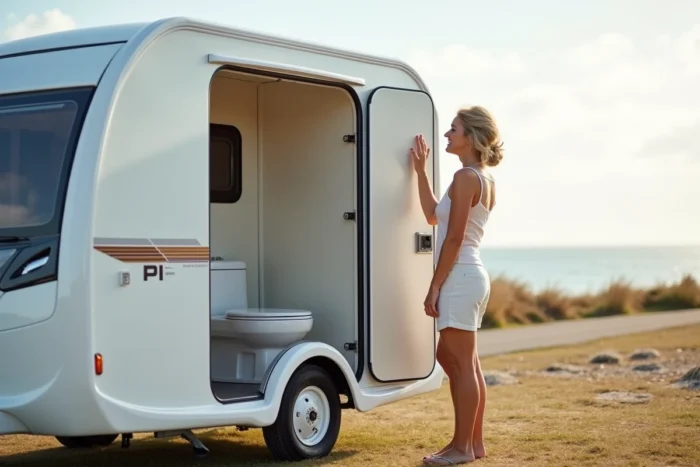
The Pi XL from Pino Caravan is probably one of the smallest caravans to include a toilet. This technical detail changes the game for couples traveling off-season or parking far from sanitary facilities.
The weight remains under 750 kg, placing it in the same administrative category as the Niewiadow. However, the interior space is optimized to the centimeter, and each piece of furniture serves multiple functions. The kitchen is reduced to the essentials.
7. Weinsberg CaraOne 390 QD: the queen bed for nighttime comfort
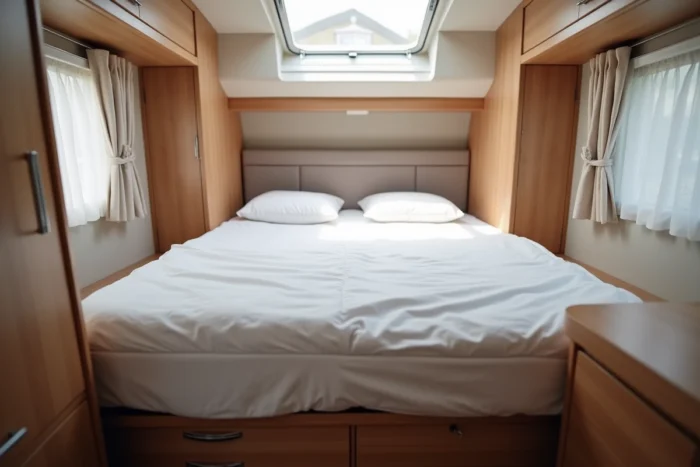
The Weinsberg CaraOne 390 QD focuses on a simple argument: a transverse queen bed that offers real sleeping comfort. In compact caravans, the sleeping area is often the first compromise. This model reverses the logic by starting with the bed to organize the rest of the space.
The weight is around 1,100 kg, and the length remains contained. The bathroom exists but is modest. The kitchen offers sufficient worktop space for two.
The choice between these seven models depends on a personal arbitration between weight, sanitary comfort, and kitchen space. Caravans under 750 kg offer maximum towing freedom at the cost of interior comfort. Models around 1,100 kg integrate a bathroom and functional kitchen but require a suitable towing vehicle. The first data to verify remains your car’s towing capacity: everything else follows from that.