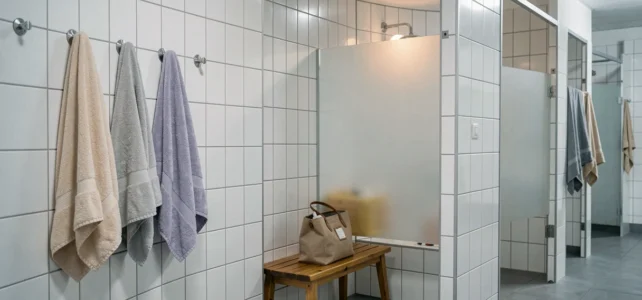
Shared showers remain one of the most discussed topics in traveler forums before a first stay in a youth hostel. Between the fear of compromised privacy and the reality on the ground, the gap is often wider than one might imagine. The functioning of these shared spaces deserves a factual examination, far from the clichés inherited from school locker rooms.
Shared showers in hostels: what cabins have really changed
Most recent youth hostels no longer offer open showers like those in gyms. The dominant model today relies on individual closed cabins with locks, installed in a shared sanitary space. In practice, each person showers alone behind a door or curtain, then only shares the area of sinks and mirrors.
This detail changes the game for travelers who dread bodily exposure. Physical intimacy is preserved in the vast majority of establishments listed on booking platforms. Negative reviews rarely focus on the lack of separation, but rather on cleanliness, water pressure, or wait times during peak hours.
Field reports diverge on one point: the quality of sound and visual insulation varies greatly from one hostel to another. A cabin with a solid door and dry floor does not offer the same experience as a translucent shower curtain in a poorly ventilated room.
Before booking, photos of the sanitary facilities published by previous travelers provide a more reliable indicator than the number of stars displayed. Those who wish to delve deeper into the subject will find a detailed report on shared showers in youth hostels and the concrete situations encountered there.
Hygiene and maintenance of shared sanitary facilities: the real obligations
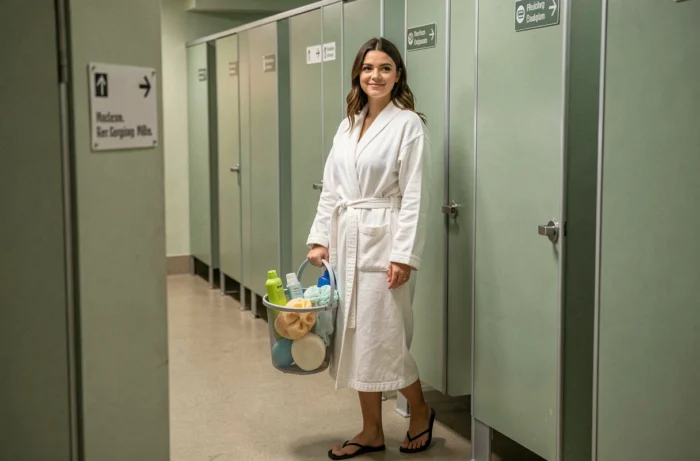
The hygiene of shared showers primarily depends on the cleaning protocol of the establishment, not on the shared nature of the space. A communal bathroom cleaned three times a day can be cleaner than a private hotel bathroom maintained only once in the morning.
Hostels affiliated with national networks (HI France, YHA, DJH) generally follow specifications that impose a minimum cleaning frequency and regular inspections. Independent establishments, on the other hand, do not all have the same standards.
What distinguishes a well-maintained sanitary facility
- The presence of rechargeable wall dispensers rather than mini-bottles placed on a damp shelf. This trend is accelerating due to European regulations on packaging (PPWR, coming into effect in February 2025), which will prohibit single-use mini-packaging for hygiene products in accommodations starting from January 1, 2030.
- A non-slip floor and an effective water drainage system, signs of recent investment in the sanitary facilities.
- Cleaning schedules posted in the shower area, a common practice in well-rated hostels.
The most documented health risk in collective facilities with hot water concerns legionella, a bacterium that develops in poorly maintained pipes. Public establishments are subject to monitoring obligations regarding water temperature and descaling of showerheads. Actual compliance varies by country and the size of the structure.
Solo travel and mixed showers: the gender question
For women traveling alone, the configuration of shared showers raises specific concerns. The majority of hostels offer mixed sanitary facilities, meaning that men and women share the same space, even if the cabins are individual.
Some hostels have created dormitories and sanitary facilities reserved for women, an increasingly visible option on booking platforms. This choice responds to a concrete demand: several female travelers report discomfort not related to the shower space itself, but to shared access corridors or adjacent open changing rooms.
The available data does not allow for precise quantification of the proportion of hostels offering non-mixed sanitary facilities in Europe. Search filters on platforms like Hostelworld or Booking sometimes mention “female only dorm,” but information about associated showers is often absent from the listing.
Alternatives to shared showers: private rooms and hybrid options
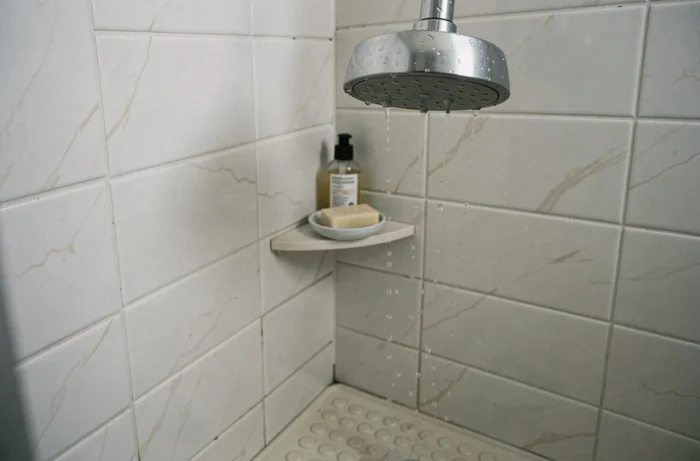
Travelers for whom shared showers represent a real barrier have alternatives within the hostels themselves. More and more establishments offer private rooms with attached bathrooms, at a price point between a classic dormitory and a hotel.
This hybrid formula allows guests to enjoy common areas (kitchen, lounge, bar) while maintaining complete privacy for hygiene. The extra cost compared to a bed in a dormitory varies significantly depending on the city and season, but is generally lower than the rate of an equivalent hotel in the city center.
When the dormitory is the only choice
In some countries or very touristy cities, private rooms are fully booked well before dormitories. In this case, a few simple reflexes can reduce the discomfort of shared showers:
- Shower early in the morning or in the middle of the day to avoid the evening queue.
- Bring shower flip-flops, a lock for the clothing locker, and a quick-drying towel.
- Prefer hostels whose recent reviews explicitly mention the cleanliness of the sanitary facilities.
The choice between comfort and budget remains personal. A stay in a dormitory with well-maintained shared showers poses no hygiene issues for the vast majority of travelers. The discomfort, when it exists, is almost always related to the state of the facilities, not the principle of sharing.
The evolution of the youth hostel landscape in Europe is leaning towards more closed cabins, gender-segmented sanitary facilities, and hygiene dispensers compliant with new environmental standards. For a first solo trip or a budget stay, the shared shower has little to do with the image one has before stepping foot inside.