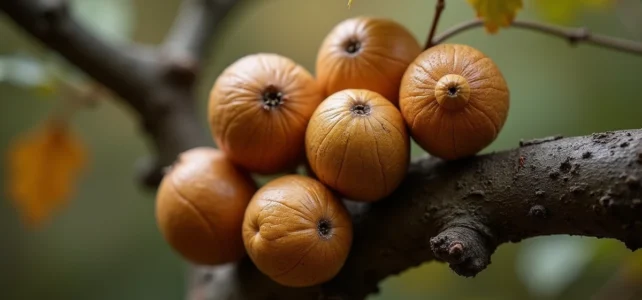
Oak galls regularly raise questions among gardeners and walkers. These plant growths, caused by small hymenopteran insects (the gall wasps), are often confused with other oak-related problems, notably processionary caterpillars. This confusion in terminology alters the perception of the actual risk. What measurable dangers do oak galls pose to humans, and which ones actually pertain to a completely different organism?
Oak Galls and Processionary Caterpillars: A Comparative Risk Table
The majority of research surrounding oak galls and their danger to humans mixes two distinct phenomena. On one side, the plant gall produced by a gall wasp. On the other, the oak processionary caterpillar and its stinging hairs. The table below contrasts the characteristics of each risk.
| Criterion | Oak Gall (gall wasp) | Oak Processionary Caterpillar |
|---|---|---|
| Responsible organism | Hymenopteran insect (family Cynipidae) | Lepidopteran (Thaumetopea processionea) |
| Formation mechanism | Stinging and laying eggs in plant tissues, abnormal growth reaction of the tree | Satin nest on branches, procession migration |
| Skin contact | No known irritating substance released upon touch | Microscopic stinging hairs causing itching, rashes, hives |
| Respiratory risk | None reported | Possible respiratory discomfort from inhaling hairs dispersed by the wind |
| Ocular risk | None reported | Irritation, conjunctivitis in case of hair projection |
| Severe allergic reaction | Not documented | Possible (urgent consultation recommended) |
| Seasonal peak | Variable depending on the species of gall wasp (spring to autumn) | Spring to early summer |
This table clarifies a point often absent from online content: the oak gall itself does not pose a direct danger to humans. The health risk comes almost exclusively from the processionary caterpillar, which may sometimes be present on the same tree.
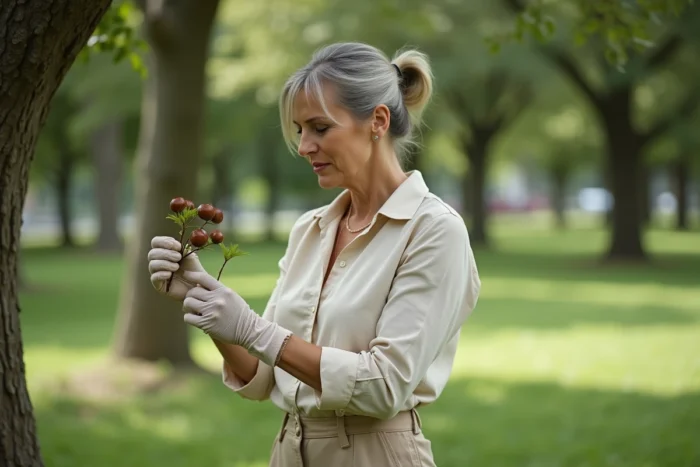
To delve deeper into the question of oak galls on humans and associated risks, distinguishing between these two organisms remains a prerequisite for any appropriate precaution.
Stinging Hairs Dispersed by the Wind: The Real Danger Under Oaks
The oak processionary caterpillar releases stinging hairs measuring a fraction of a millimeter. These hairs do not require direct contact with the caterpillar to cause symptoms. The wind is sufficient to carry them several meters, reaching the skin, eyes, or respiratory tracts of people who are not even in immediate proximity to the nest.
This airborne dispersion changes the level of precaution to be adopted outdoors. A gardener working under an infested oak may develop intense itching, persistent pruritus, or a rash without having touched either the caterpillar or the nest. Allergic individuals are particularly exposed, with a heightened risk of a more pronounced reaction.
Warning Signs Justifying Urgent Medical Consultation
Most skin reactions remain mild and resolve within a few days. However, certain signs necessitate prompt consultation with a doctor:
- Respiratory discomfort (persistent cough, wheezing, feeling of tightness) after exposure in an area with infested oaks
- Marked ocular involvement (intense redness, swelling of the eyelids, pain) that does not subside with rinsing
- Severe allergic reaction with facial swelling, malaise, or difficulty swallowing
- Extensive rash not responding to over-the-counter antihistamines
These situations do not concern the oak gall itself, but rather exposure to the hairs of processionary caterpillars. The confusion between the two can delay appropriate care.
Managing Laundry and Clothing After Exposure to Processionary Caterpillars
A rarely addressed angle concerns what happens after exposure. The stinging hairs cling to clothing, hair, laundry hung outside, and even garden furniture. Returning home without precautions can prolong exposure and contaminate the interior of the home.
Several measures significantly reduce this risk:
- Remove clothing worn in infested areas immediately upon returning and wash separately, at high temperature if the fabric allows
- Shower the skin and hair without scrubbing (scrubbing breaks the hairs and worsens irritation)
- Do not shake clothing indoors, which would re-dispersed the hairs into the ambient air
- Bring in laundry hung outside if a nest of processionary caterpillars has been spotted on a neighboring oak
A separate wash at high temperature inactivates the stinging hairs and prevents their transfer to other textiles. This practical detail makes a notable difference for individuals prone to prolonged itching.
Oak Pollen Allergy: A Third Factor to Distinguish
Allergic individuals consulting about oak galls sometimes seek answers related to a different issue: oak pollen allergy. The oak produces abundant pollen in spring, responsible for rhinitis, conjunctivitis, and asthma attacks in sensitized individuals.
This pollen has no relation to galls or processionary caterpillars. The three phenomena coexist on the same tree but involve distinct biological mechanisms. An individual allergic to oak pollen does not react to galls, and a person irritated by caterpillar hairs is not necessarily pollen-sensitive.
Pollen monitoring organizations regularly issue red alerts for oak and grasses during the season. Referring to local pollen monitoring bulletins allows individuals to adjust their outings and take a preventive antihistamine treatment prescribed by a doctor.
The oak gall, in itself, releases no known irritating substance or allergen for humans. The real danger under oaks comes from processionary caterpillars and their stinging hairs, while seasonal allergy pertains to pollen. Correctly identifying the source of symptoms, whether it be itching, pruritus, or respiratory discomfort, conditions the appropriate treatment and avoids weeks of poorly managed discomfort.