
The leisure market in France no longer resembles what it was five years ago. Hybrid formats, combining immersive technology and physical scenarios, are multiplying in major cities as well as in rural areas. Virtual reality escape games, nighttime creative workshops, or hikes with unusual pets are reshaping the map of activities accessible to a wide audience.
Immersive and Technological Leisure: What the New Generation of Activities Offers
Since 2023, a wave of immersive experiences has transformed the urban leisure offering. High-end Formula 1 simulators, virtual reality escape games, glow-in-the-dark painting, and private karaoke with staging: these formats target both groups of friends and families with teenagers.
What distinguishes these activities from traditional leisure is their scripted dimension. Each session tells a story, imposes choices, and adapts the difficulty to the group. A VR escape game does not simply present puzzles: it immerses participants in a visual and auditory environment that changes according to their decisions.
However, the accessibility of these formats remains uneven across different audiences. Most virtual reality experiences impose a minimum age and can cause discomfort for some individuals sensitive to motion sickness. The available data do not allow for a conclusion regarding systematic adaptations for young children or seniors. Before booking, checking access conditions and physical restrictions helps avoid unpleasant surprises.
Among the activities offered by On ne m’avait pas dit que, there are indeed various formats that allow filtering by age and the type of experience sought.
Unusual Outdoor Activities: Hikes with Animals and Nighttime Via Ferrata
Unusual leisure does not only take place in rooms equipped with sensors and screens. An increasing part of the offering is unfolding in nature, with formats designed to be accessible without any particular physical condition.
Hiking with Llamas or Sled Dogs
Animal-assisted walks have multiplied well beyond mountainous areas. There are now hikes with donkeys, llamas, or Nordic dogs in regions like the Loire, Lot, or Île-de-France. The animal imposes a slow pace, suitable for children and occasional walkers.
These outings generally last half a day. They often include a time for contact with the animal before departure, allowing younger participants to become familiar. For families with children under six, this format works better than a traditional hike because attention remains captured by the presence of the animal.
Nighttime Via Ferrata and Sensory Trails
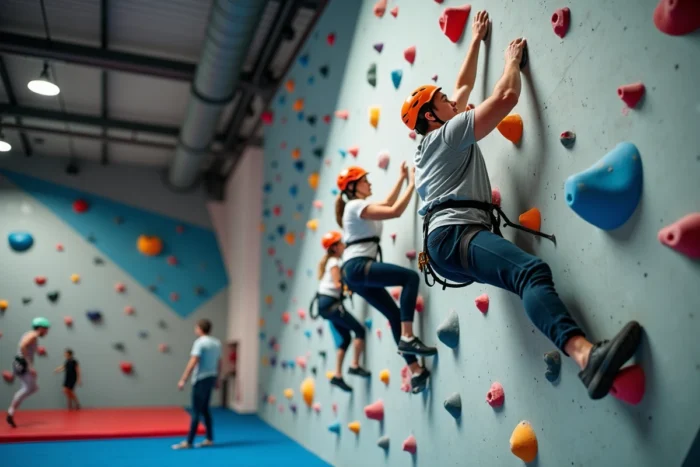
Nighttime via ferrata represents a more niche segment. It is aimed at practitioners who already have experience with daytime via ferrata, and feedback on the actual difficulty level varies by site. Supervision by a qualified instructor remains the norm for these sessions.
Sensory trails, whether barefoot or blindfolded, represent the other side of unusual outdoor leisure. Accessible from the age of four or five, they engage touch, hearing, and smell in a forest setting. Several parks in France offer this type of trail on short loops.
Creative and Culinary Leisure: Workshops That Adapt to All Ages
Creative workshops have evolved beyond the simple pottery class on Wednesday afternoons. Current formats incorporate specific themes and a calibrated duration to maintain the engagement of very different audiences.
- Parent-child cooking workshops: preparing a complete menu in pairs, with recipes adapted to each age group. Sessions usually last between one and two hours.
- Cocktail workshops (non-alcoholic for minors): learning mixing techniques, presentation, and tasting. A format that works well for both teenage birthdays and adult groups.
- Immersive art workshops: large-format canvas painting in a themed sound and light environment. Some spaces offer family sessions on weekends.
The common point of these formats: a limited duration and a tangible result. Participants leave with a dish, an object, or a photo. This concrete dimension partly explains their success among audiences who do not identify with traditional sports or cultural outings.
Staycation and Unusual Leisure Near Home: A Change in Logic
The concept of staycation (vacation without traveling far) has accelerated the spread of unusual leisure in areas that were not historically associated with adventure tourism. Providers now offer guided bivouacs, nights in caravans, or micro-adventures less than an hour’s drive from major urban areas.
The offering of unusual leisure in staycation explicitly targets families with modular packages based on the number of participants and the age of the children. A night in a treehouse, for example, can be combined with a ground-level treehouse building workshop for younger children while adults enjoy the tranquility above.
This local repositioning also changes consumption frequency. Instead of one unusual activity per year during vacations, some families incorporate these formats into their regular weekends. Feedback on the sustainability of this trend varies, but the offering continues to structure itself in this direction.
The filter by age, type of experience, and geographical proximity becomes the main selection criterion. Rather than searching for “the best unusual activity in France,” the search is now based on practical constraints: available duration, acceptable distance, group composition. It is this concrete sorting that determines whether one ends up in a free-fall simulator or on the back of a donkey in the Lot.