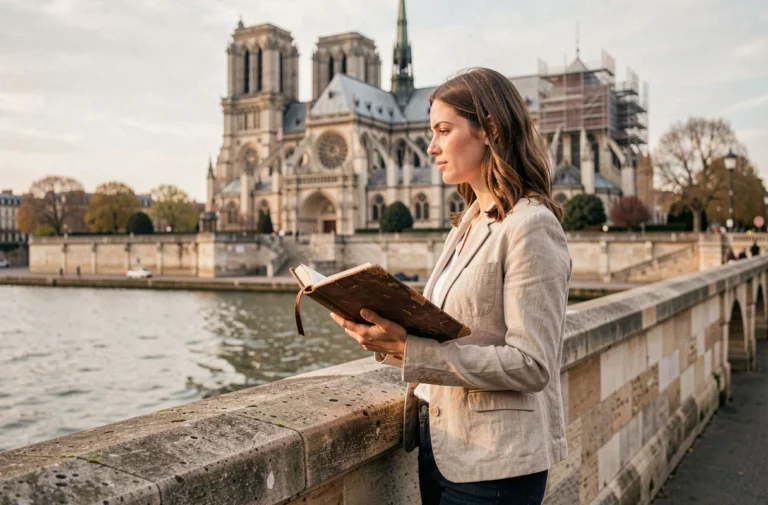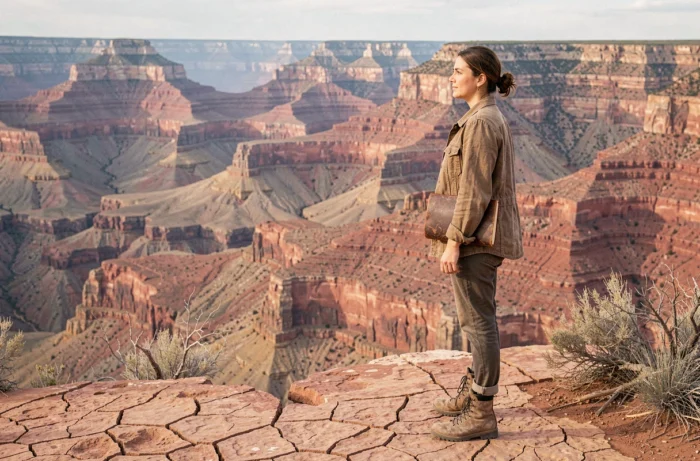
A photo of terraced rice fields, a snapshot of a cobblestone alley in the rain, a candid portrait in a spice market: these images shape our desire to travel long before the plane ticket is booked. Travel through images is not just about documenting an itinerary. It transforms the way we look at a place, understand it, and tell others about it.
Digital provenance and authenticity of travel photos
Have you ever noticed that the same beach can look idyllic in one photo and ordinary in another? Framing, lighting, and post-processing change everything. With the rise of editing tools and generative AI, the question of authenticity arises differently.
Creators today publish images of entirely invented places or heavily altered real landscapes. The line between destination photography and illustration becomes blurred. For travelers looking to travel through images reliably, this evolution is a game changer.
The C2PA standard records the origin and modification history of a file, but it does not prove that the photographed scene or its caption is truthful. An image can be technically authenticated while still being heavily staged. This distinction is crucial for travel narratives, where visual emotion often takes precedence over factual verification.
The World Press Photo competition has explicitly banned AI-generated images and generative fill in its announcement of the 2025 winners. Such rules are spreading in documentary circles and send a clear signal: travel photography must still prove it shows the real.

Generative AI and travel imagery: what changes for travelers
Artificial intelligence is no longer just retouching photos. It is creating them from scratch. A user can generate an image of a Burmese temple at sunset in seconds, without ever having set foot there.
Why does this change matter for someone planning a trip or family adventure? Because the images viewed beforehand shape expectations. A traveler who discovers a less spectacular landscape on-site than the one seen online feels a measurable disappointment. The gap between image and reality is not new, but AI amplifies it.
Differentiating a real photo from a generated image
No simple method guarantees detection by the naked eye. A few practical guidelines help sort through:
- Check the source: an identifiable photographer, a recognized media outlet, or a documentary competition offers more guarantees than an anonymous account on a social network.
- Observe inconsistent details: impossible reflections, repetitive textures on water or vegetation, distorted hands or letters still betray some generations of AI.
- Look for metadata: original files contain EXIF data (camera, date, GPS coordinates). Their absence proves nothing, but their consistent presence reassures.
These reflexes do not replace a technical tool, but they develop a critical eye towards the travel images that circulate massively.
Travel photography and climate constraints: an evolving perspective
The flygskam movement (the shame of flying, which originated in Scandinavia) has changed the practices of some travel photographers. Rather than multiplying distant destinations, some are turning to nearby territories, explored in depth.
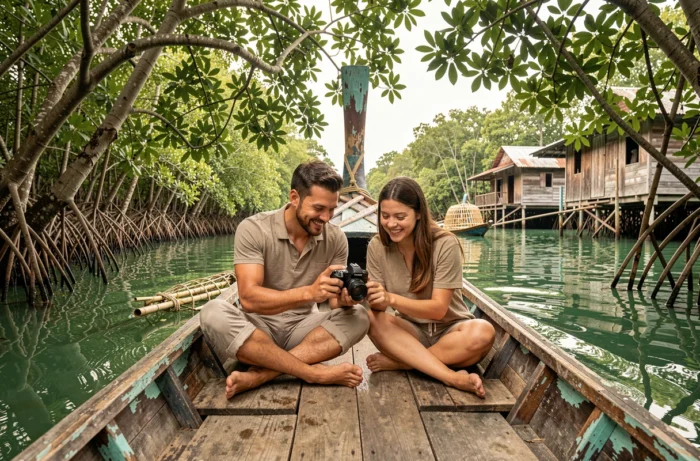
Photographing local nature with the same rigor as a report from the other side of the world becomes a distinct exercise in style. Sustainable photography competitions encourage this approach by valuing geographical proximity and the duration of the stay.
This trend aligns with a simple observation: the most striking images rarely come from a quick flyover. They arise from time spent in a place, repeated encounters with its inhabitants, and light observed at different times of the day.
Traveling less far, looking better
A discovery tour in Europe or even in one’s own region can produce images as powerful as a journey in Southeast Asia. The difference lies less in the destination than in the attention given to the subject.
Some concrete practices nourish this approach:
- Returning multiple times to the same place to capture seasonal variations and changes in light.
- Prioritizing encounters with locals over empty panoramas, enriching the visual narrative.
- Limiting the number of shots per day to force selection and refine the perspective.
The constraint of slow travel pushes for more thoughtful images, less interchangeable than the standardized views on social media.
Building a coherent visual travel narrative
Accumulating photos is not enough to tell an adventure. A visual travel narrative relies on progression: departure, arrival in a place, details that reveal its character, faces encountered, and then a closing element.
This narrative structure has existed since illustrated travel journals. It is now transposed onto blogs, online galleries, and portfolios. Each image must serve a function in the sequence, like a word in a sentence.
A portrait alone shows a face. Placed after a wide shot of a market and before a close-up of spices, it tells a story of a meeting in context. The order of images creates meaning, not their individual technical quality.
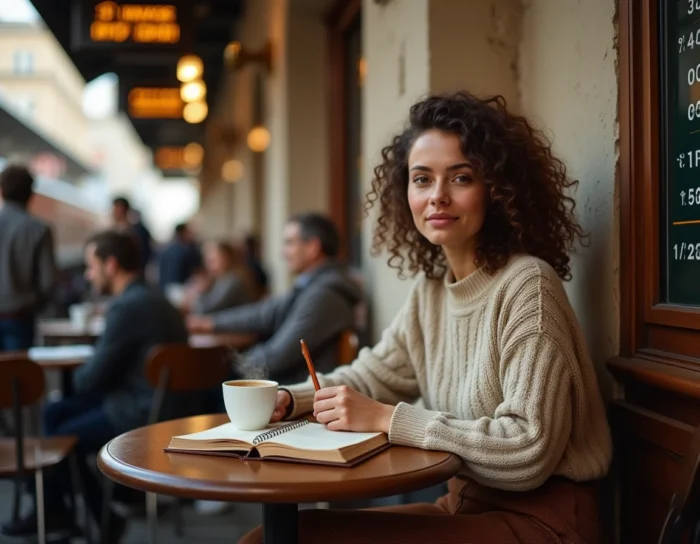
The selection process is often more challenging than the shooting itself. Keeping twenty strong images out of hundreds requires knowing how to eliminate without regret. A good visual travel narrative is recognized by what it does not show.
Travelers who practice documentary photography know this: the captivating image is not the one that impresses at first glance. It is the one that, revisited months later, evokes a precise feeling, almost a smell, a background noise. Achieving this level of accuracy requires time in the field, a trained eye, and the honesty to show places as they are.