
Most business trend lists for 2026 compile the same verticals: generative AI, e-commerce, wellness. However, we observe that the real question is not which sector is promising, but which model remains defensible once the wave of competitive entries has saturated the market. It is this defensibility filter that separates a viable business from a mere trend signal.
Business Defensibility 2026: What Resists Saturation in AI and E-commerce
A defensible business relies on an asset that is difficult to reproduce. In 2026, three categories of assets meet this criterion: proprietary data, recurring customer relationships, and sector-specific regulatory constraints.
Proprietary data concerns companies that collect, structure, and exploit datasets specific to their niche. A SaaS cybersecurity tool trained on the logs of a specific industrial sector creates a barrier that neither a generalist competitor nor an open-source AI model can quickly overcome. Exclusive sector data is the strongest competitive moat in 2026.
Recurring customer relationships, in the form of subscriptions or service contracts, lock in revenue. As-a-service models (software, maintenance, equipment) reduce churn rates when they integrate a layer of customization. SMEs transitioning from a transactional model to a recurring model gain in valuation and predictability.
We recommend project leaders test their idea against a simple question: if a competitor launches the same service tomorrow with a higher advertising budget, what keeps the customer with you? If the answer is solely price, the business is not defensible. To discover the business section of Neo News, which continuously tracks these sector changes, the editorial approach relies on this same viability filter.
Digital Sovereignty and Made in France: Beyond the Label
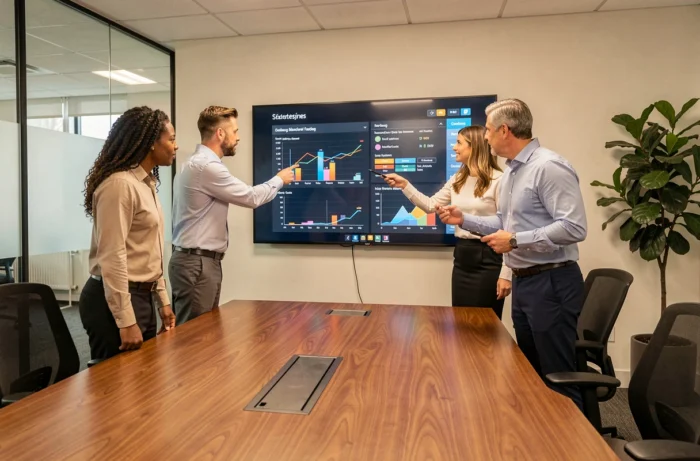
The market for software and digital services is expected to represent 70 billion euros in France in 2026, driven by a marked return to digital sovereignty. This trend is not limited to a marketing argument. It reflects concrete compliance requirements (data hosting in Europe, SecNumCloud certifications) that create barriers to entry for non-European players.
Made in France remains a confirmed business trend. Nearly two-thirds of French people report spending more than 500 euros a year on products made in France. The profitability balance remains difficult to find for brands that produce locally, but the price premium accepted by customers increases when the product combines local manufacturing and verifiable traceability.
Sovereign digital services (cloud, messaging, electronic signature) represent a segment where demand from businesses and local authorities exceeds supply. SMEs that position themselves in these niches benefit from a structural advantage: their clients are constrained by regulation, not simply attracted by a trend.
Specialized Wellness: Niches That Escape Commoditization
The wellness sector perfectly illustrates the difference between trend and defensibility. Generalist coaching and online fitness are saturated. In contrast, ultra-targeted segments such as mental health, women’s hormonal health, and personalized supplements are experiencing distinct dynamics.
This shift towards more medicalized or specialized offerings creates natural barriers:
- Workplace mental health requires certifications and partnerships with health professionals, which limits opportunistic entrants
- Longevity and stress management rely on validated protocols, not on generic content that can be recycled by AI
- Personalized supplements require a specific supply chain (formulation, compliance, customer tracking) that cannot be replicated with a simple e-commerce site
For entrepreneurs targeting wellness, we observe that deep specialization in a specific segment protects better than diversification. An actor positioned in stress management in a hospital setting, for example, builds expertise and a reputation that neither a generalist competitor nor a chatbot can replicate.
AI in France: Massive Adoption, Selective Monetization

Nearly half of the French population uses AI in 2026, marking a 28-point increase in two years. This rapid adoption masks a less uniform reality on the business side: the companies that truly monetize AI are those that integrate it into an existing business workflow, not those that sell AI as a final product.
Robotics, cybersecurity, and predictive analytics remain promising sectors, but the most concrete opportunities for SMEs lie in vertical integration. Automating inventory management for a franchise network, optimizing technical intervention planning, personalizing customer journeys in niche e-commerce: these applications generate value because they solve a specific problem.
Generalist AI tools (writing, design, coding) are already commoditized. Launching a business around a GPT wrapper without added business value no longer makes economic sense. In contrast, combining AI and sector expertise (real estate, health, logistics) allows for charging for expertise, not technology.
Franchise and Local Services: Physical Commerce as a Defensible Asset
Local physical commerce retains a structural advantage that e-commerce cannot replicate: direct relationships and location. The successful franchise networks in 2026 are those that combine physical points of sale with a digital layer (click and collect, local CRM, geolocated marketing).
- Personal services (home help, early childhood, senior support) benefit from a growing demographic demand and a regulatory framework that protects licensed actors
- Specialized catering (short circuits, single-product concepts) attracts an audience willing to pay a premium for experience and traceability
- Repair and refurbishment shops fit into the circular economy and meet a sustainability expectation that goes beyond mere fashion
A well-chosen physical location remains a rare asset, especially in medium-sized cities where online competition is less aggressive than in metropolitan areas. Brands that combine local anchoring with targeted digital presence build a hybrid model that is difficult to attack.
The distinction between fleeting trends and defensible businesses is made on a simple criterion: the ability to retain customers without lowering prices. Sectors that combine regulatory constraints, specialized expertise, and recurring customer relationships are those that will navigate 2026 without relying on an algorithm or constantly rising advertising acquisition costs.